Blog Articles
Bhramari Pranayama and Nitric Oxide: The Physiology of a Humming Breath
 Anatoly Yasinsky · physicist, qigong instructor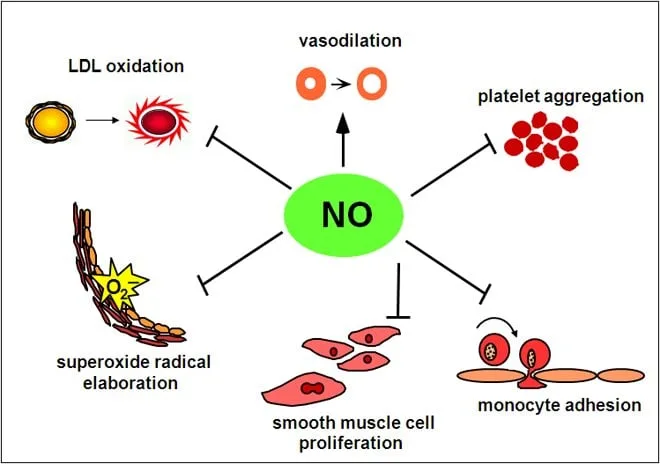
Bhramari is Sanskrit for “bee.” In this pranayama you exhale with an “mmm” sound, like a buzzing bumblebee. The technique looks almost childish, but it has a fascinating physiological explanation, which I came across while writing my yoga therapy thesis. I had to work through a pile of scientific papers on yoga techniques, and among them was a story about nitric oxide.
Where nitric oxide in the nose comes from
Nitric oxide (NO) is a small gas molecule the body makes on its own. One place where there is a lot of it is the paranasal sinuses. The sinus lining produces NO all the time, and the concentration inside is high. The sinuses connect to the nasal cavity through narrow openings, so during quiet breathing the air in them is renewed slowly, and only a small fraction of the gas gets out.
The experiment that explained it
In 2002 two Swedish physiologists, Eddie Weitzberg and Jon Lundberg, published a short paper with a telling title: “Humming greatly increases nasal nitric oxide.” In ten healthy volunteers they compared a quiet exhale through the nose with a humming one. During humming, the NO concentration in the air leaving the nose rose about fifteenfold.
As a physicist, what I like most is the mechanism. Sound makes the air in the nasal cavity oscillate, and those oscillations act like a pump: gas from the sinuses is actively mixed through the narrow openings with the air in the nose. The sinuses do not start producing more NO; they simply get ventilated better. The authors themselves suggested humming as a simple test of whether the sinus openings are clear and left possible therapeutic effects for future research.
What the body uses NO for
Thousands of papers have been written about this molecule, and more appear every year. In 1992 the journal Science named NO “Molecule of the Year,” and in 1998 Robert Furchgott, Louis Ignarro and Ferid Murad received the Nobel Prize in Physiology or Medicine for discovering nitric oxide as a signaling molecule in the cardiovascular system.
In short, here is what it does:
- relaxes the smooth muscle of blood vessels, regulating vascular tone, blood flow and blood pressure;
- helps immune cells destroy bacteria, fungi and other pathogens;
- carries signals between neurons;
- affects mitochondrial function and iron metabolism in cells;
- is also behind the mechanism of erection, which is how some well-known drugs work.
Bhramari and viruses: where the facts end
In 2020 the Indian ENT specialist M. K. Taneja published a paper proposing a modified bhramari as a complementary measure for COVID-19. The logic went like this: in lab experiments with the 2003 SARS virus, nitric oxide suppressed viral replication in cell culture, and bhramari, according to Weitzberg and Lundberg, increases the amount of NO in the nose.
Here I want to be careful. Taneja’s paper is a hypothesis, not a clinical trial. The fact that NO suppresses a virus in a test tube does not mean a few minutes of humming will cure an infection. Bhramari does not replace your doctor or your treatment. What can honestly be said is this: the technique is safe for most people, it ventilates the sinuses well, and it lengthens the exhale, which calms the nervous system. That alone is a good reason to include it in your practice.
How I practice bhramari
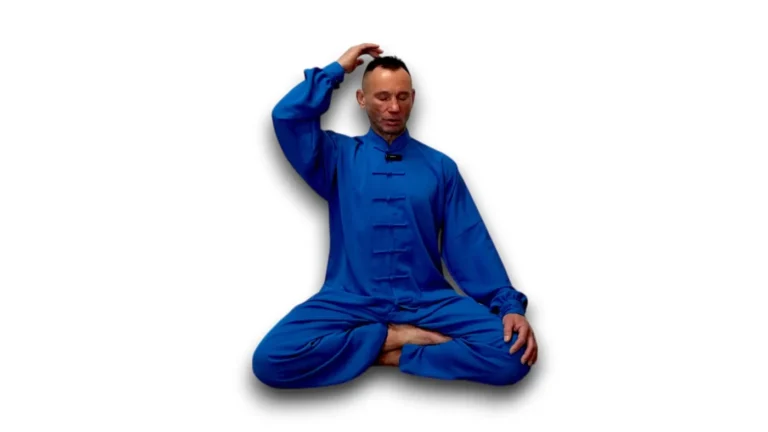
Sit comfortably with a straight back, as described in my article on how to sit correctly. Take a calm breath in through the nose. On the exhale, with your mouth closed, make a low, even “mmm” and try to feel the vibration in your nose, cheeks and forehead. The exhale is longer than the inhale, and the sound is effortless. Five to seven rounds are enough to start. You can close your ears with your thumbs so the sound resonates inside your head. If you feel dizzy, just return to normal breathing.
I demonstrate bhramari together with other exercises in a video on breathing recovery (in Russian); the technique starts at 6:05:
Audio & subtitles: EN · BG · RU (⚙ in the player)
You will find more breathing techniques on my pranayama page. Basic breathing exercises, along with asanas and qigong, are covered in detail in my book “Yoga vs Qigong: Basic Techniques”.
More from the blog
All blog posts →
The foundations of yoga and qigong in six practices: 235 pages, over 200 photos and video lessons via QR codes. In English, Bulgarian and Russian.