Blog Notes
BIKE, SUP & DWS: how I invented my own triathlon and what came of it in a year
 Anatoly Yasinsky · physicist, qigong instructor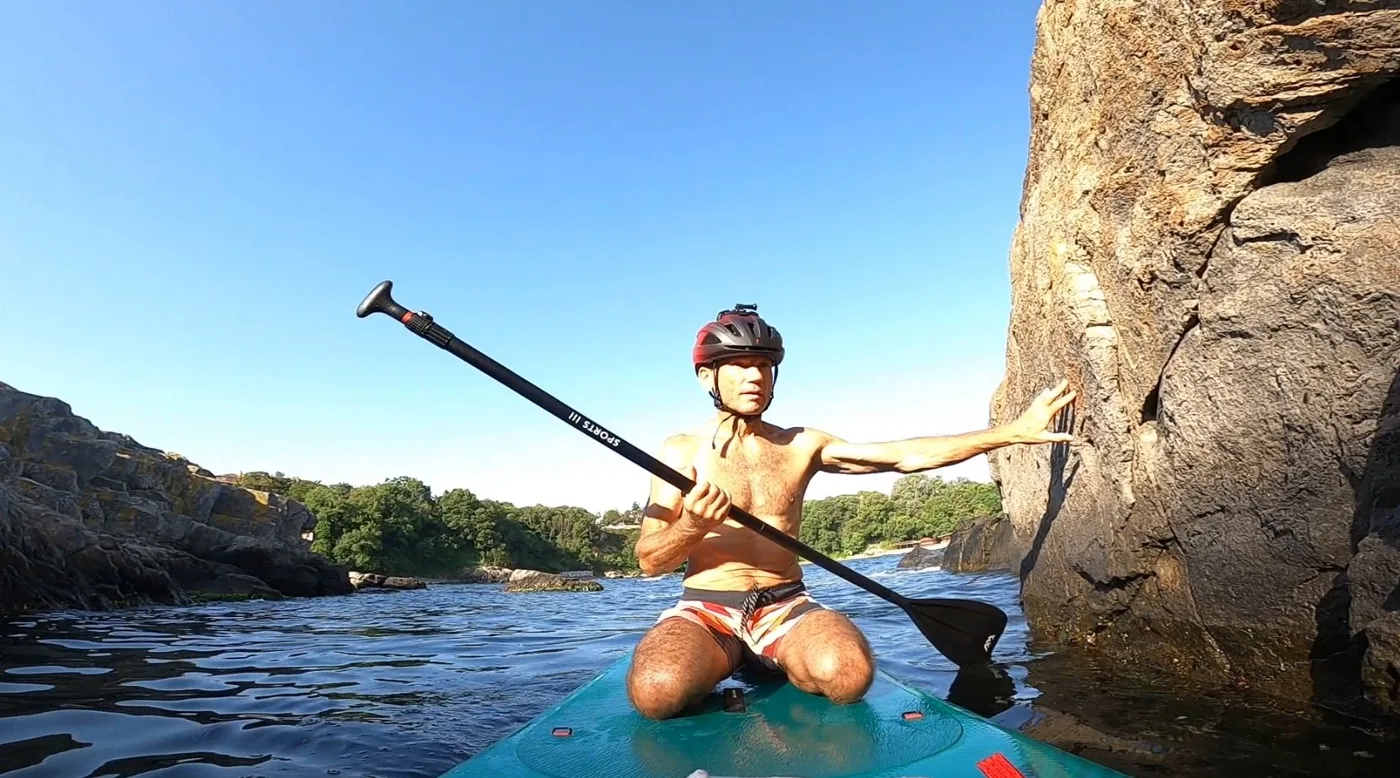
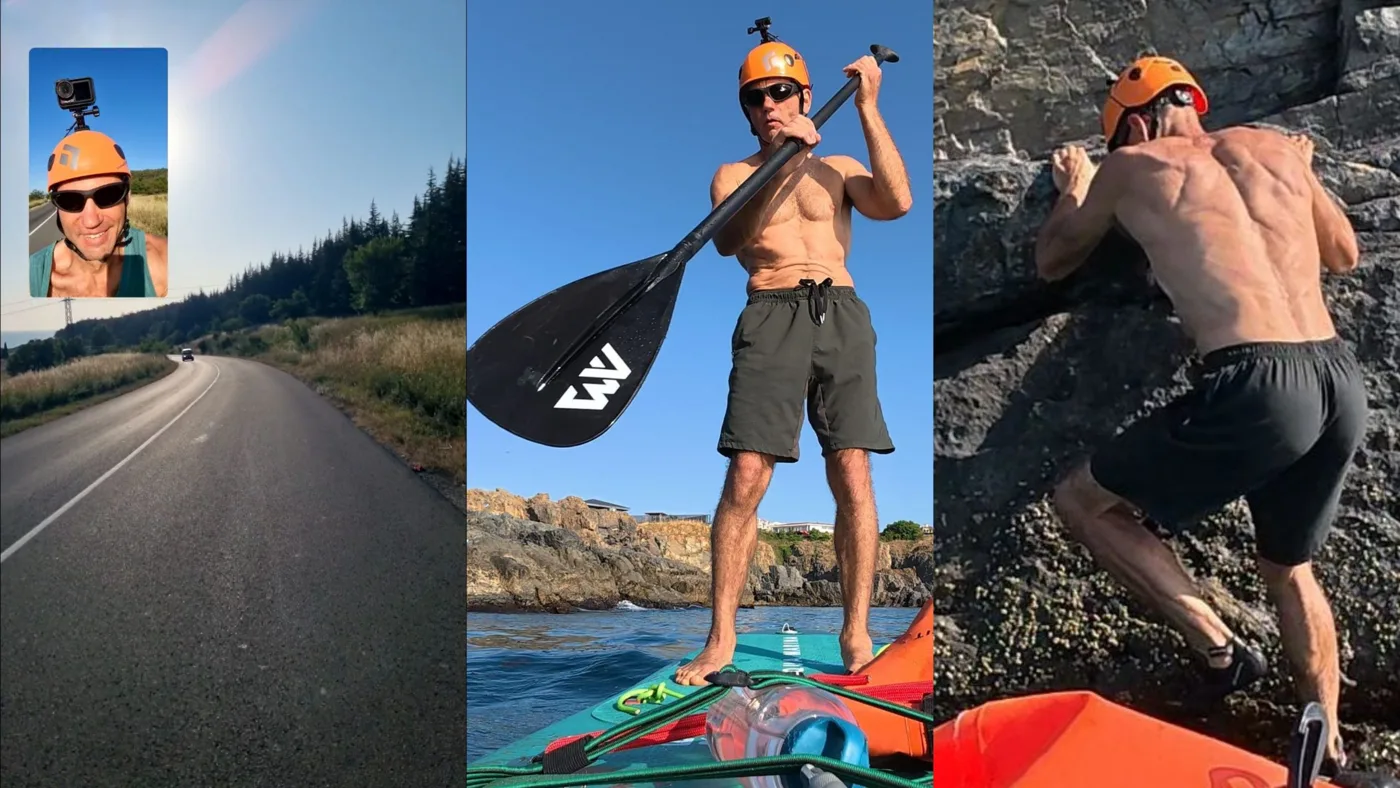
On June 21, 2024, half joking and half serious, I declared the birthday of a new sport. It’s called BIKE, SUP & DWS, and it has three legs: ride there by bike, paddle there on a board, and climb a cliff right above the sea.
The three legs in order
BIKE. An ordinary bicycle powered by nothing but your legs. Mine is a mountain hardtail, meaning a frame with no rear suspension and a suspension fork up front.
SUP. An inflatable board you stand on and paddle with a single-blade paddle, known as a stand up paddle board.
DWS. Deep water solo, climbing coastal rocks without a rope. The water itself is your protection, so there has to be enough depth under the route for a fall to end in a swim, not an injury.
Where the idea came from
It all started about two years before the “official” launch. I was climbing sea cliffs near Sozopol when I spotted a guy on a SUP calmly gliding along the rocks. I had seen paddle boards before, of course, but only at beaches. It had simply never occurred to me that you could take one into such wild spots.
That’s when the picture came together. The most interesting DWS lines can’t be seen from shore, and many can’t be reached on foot. From the water, the cliffs look completely different. You could drive the board to the sea, but that’s boring, and more to the point, I don’t own a car. So the way to the water had to be by bike. And the three activities merged into one on their own.
Audio & subtitles: EN · BG · RU (⚙ in the player)
Why these three
This triathlon brings together almost everything I love and know how to do. Cycling, especially in hilly terrain, loads the legs, builds endurance, and is great training for your breathing. Climbing teaches balance, flexibility, precision, and focus; I have long called it yoga on the wall. And the board isn’t really new to me, quite the opposite: it has a bit of freeriding, ski touring, wakeboarding, and wakesurfing all in one. On my very first day on the waves I got the same feeling as riding a snowboard through fresh powder.
In a broader sense, for me this is the same practice as qigong and tai chi: movement joined with breath, and a person joined with nature. On a climb, the inhale and exhale set the pace, and once your breathing falls apart, you ride on stubbornness alone. Paddling quickly finds its own steady rhythm too, and the breath settles in with the strokes. On the rock, a couple of slow exhales before a hard move help the body stop tensing up. If you want to learn to control your breathing on purpose, the pranayama breathing practices are a good place to start.
What the first year showed
A year later I can say the triathlon turned out very well balanced in terms of load, and genuinely technical at the same time.
The bike is in charge of endurance. You usually ride over rough terrain and carry a load, since the board and gear travel with you.
The board gives you access to cliffs you can’t reach from shore. But that isn’t simple either: you have to fight the waves.
Climbing above the sea remains the highlight of the whole route. You have to pick a safe line, prepare a spot to start from, and remember that the rock can be wet, brittle, or sharp. There are plenty of small details like that, and your safety depends on them. So don’t try DWS without climbing experience and without checking the depth under the cliff.
Audio & subtitles: EN · BG · RU (⚙ in the player)
Join in
Climbers, cyclists, paddlers, and anyone who loves moving outdoors: tell me what you think of the idea. The coast around Burgas, where I live and teach qigong classes, is perfect for it. Someday I’d love to gather like-minded people and hold a real BIKE, SUP & DWS festival.
More from the blog
All blog posts →


The foundations of yoga and qigong in six practices: 235 pages, over 200 photos and video lessons via QR codes. In English, Bulgarian and Russian.