Blog Notes
Yoga and Qigong Through a Physicist’s Eyes: My First Yoga Journal Article
 Anatoly Yasinsky · physicist, qigong instructor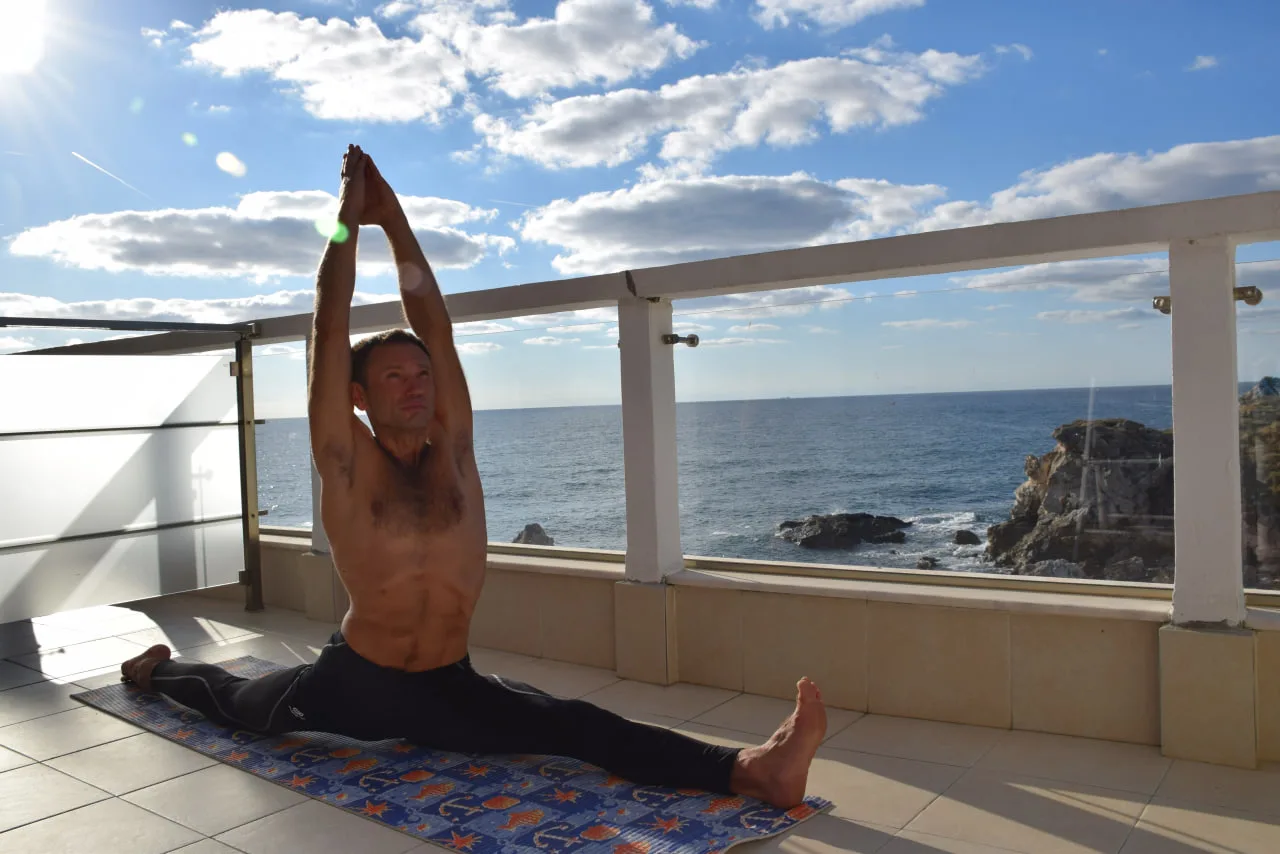
Some good news: my first article has come out in Yoga Journal (the Russian-language edition), and I’m now one of the magazine’s contributors. I didn’t show up with yet another piece on asanas. I brought qigong, a topic yoga publications usually tiptoe around, so credit to the editors for taking it on.
The article looks at what actually happens in the body when you practice. No channels or subtle energies, just breathing, connective tissue, and the nervous system. Below is my own short summary of the main ideas. The full text is on the magazine’s website, in Russian.
What the article covers
The Indian and Chinese traditions each have their own map of the body. In one, prana flows through the nadis; in the other, qi moves along meridians and gathers in the dantian. Both maps were drawn centuries before anyone had an anatomy textbook. Strip away the vocabulary, though, and both practices ask you to do the same three things: control your breath, focus your attention, and consciously adjust muscle tension.
Take breathing first. A slow belly breath with a long exhale switches on the parasympathetic system through the vagus nerve, so the heart rate drops and arousal settles. Both schools pull that same lever. The difference is in how they deliver it. Pranayama tends to rely on counting and breath holds, while qigong ties each breath to a smooth movement of the arms and torso.
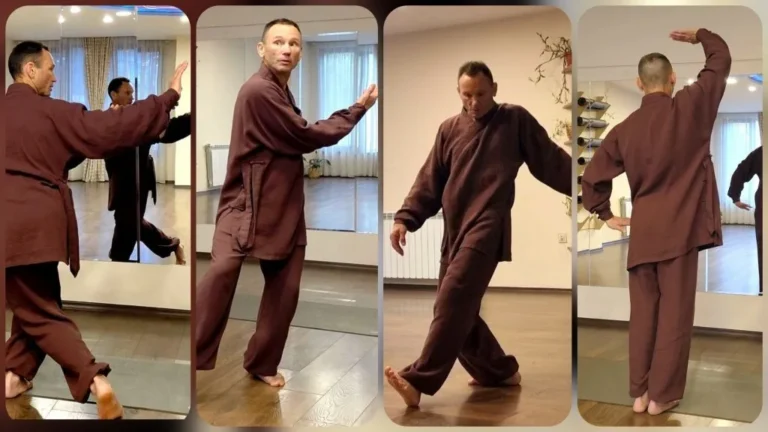
The biggest practical difference, in my view, is stillness versus motion. In an asana, the body holds a shape, the muscles work isometrically, and a joint stays at one range for a while. That builds strength and flexibility in that specific position. Qigong almost always flows: arcs, circles, and no pausing at the end of the range. It’s gentler on the joints, and what gets trained first is coordination and balance. That’s why older people and anyone with limited mobility are so often advised to start with qigong.
The story is similar for fascia and the nervous system. Long holds in yoga gradually make connective tissue more elastic. The soft, continuous movement of qigong barely stretches anything, but it helps the tissue layers glide over one another, which people recovering from injury or dealing with sore joints often tolerate better. A fast-paced yoga flow first revs up the sympathetic system and then swings back into relaxation, while the even tempo of qigong keeps you calm from start to finish. Neither is better. They simply load the body’s regulatory systems in different ways.
The takeaway is simple: don’t pick blindly, pick for the job. If you need strength, flexibility, and joint range, yoga is the closer fit. If you want to calm your nervous system, work on coordination, and go easy on your joints, qigong fits better. Many of my students end up combining the two, for example gentle qigong in the morning and a few held asanas in the evening.
Why a physicist finds this interesting
What grabs me most here is one observation. Two cultures that knew nothing about each other, or about modern anatomy, arrived at very similar principles through trial and error. That doesn’t prove anything mystical. What it does show is that the body runs on its own logic, shared by all of us, and that long, careful self-observation can uncover it.
You can read the full article here: Yoga and Qigong: Physiological Similarities and Differences (in Russian). All my pieces for the magazine are collected on my Yoga Journal author page.
If you’d like to compare the two traditions in your own body, take a look at the basic techniques of yoga and qigong: six practices that make a good starting point. For a detailed walkthrough with photos and video lessons, see my book “Yoga vs Qigong: Basic Techniques”.
More from the blog
All blog posts →
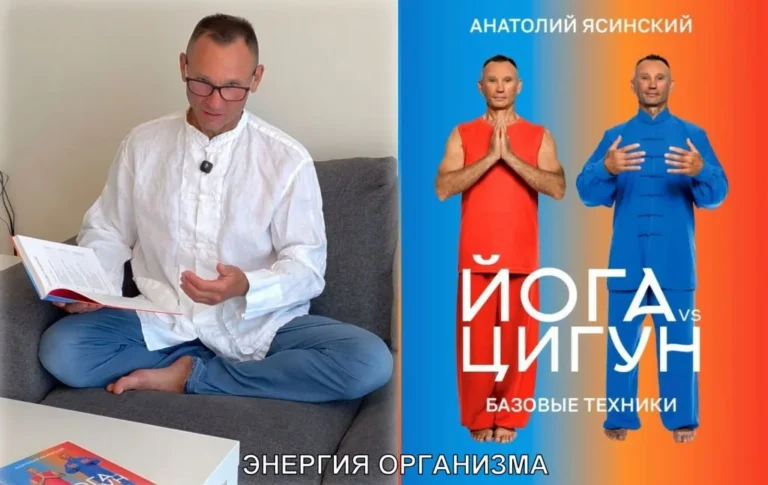
The foundations of yoga and qigong in six practices: 235 pages, over 200 photos and video lessons via QR codes. In English, Bulgarian and Russian.