Blog Notes
“Qigong from Behind”: how I filmed qigong sets that are easy to follow
 Anatoly Yasinsky · physicist, qigong instructor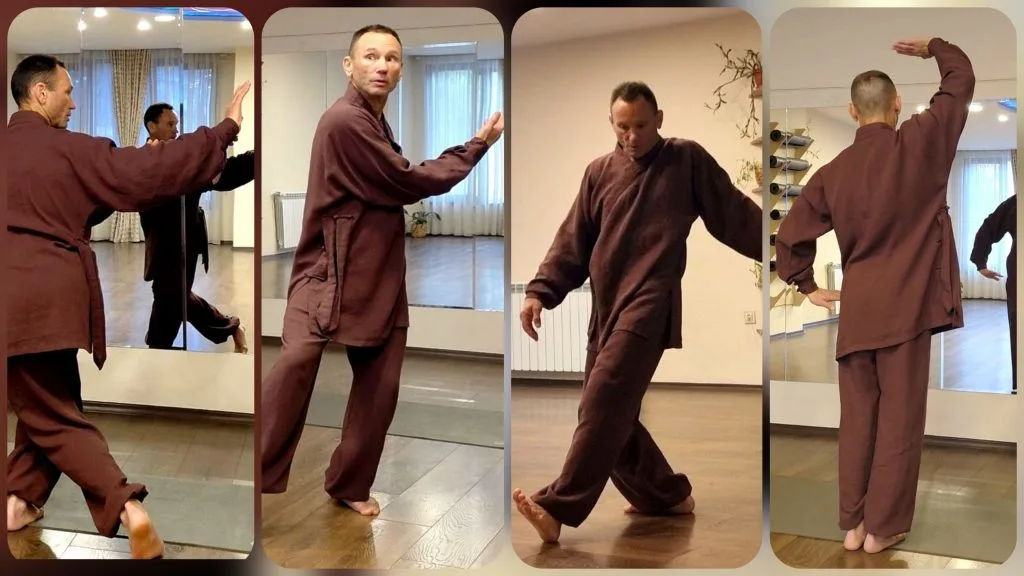
If you have ever learned a routine from a video, you probably know the feeling. The person on the screen raises their right arm, you, standing opposite, raise your left, then you catch yourself, shift your foot, lose the tempo and your breath along with it. All your attention goes into flipping the picture in your head, and there is very little left for the practice itself.
For years I watched my students struggle with this when they practiced at home with online videos. At some point I decided I was done putting up with it and filmed my sets differently. That is how Qigong from Behind came about: six classic health qigong sets recorded so that following me is no harder than standing in a class right behind my shoulder.
One camera behind, one to the side
The main camera stands behind me. You look at my back and move the same way I do: my right arm stays your right arm. There is nothing to mirror, so your mind is free for what matters most, the sensations in your own body.
Of course, you can’t see everything from behind. You can’t tell how the pelvis is tucked, where the elbows point, or how long the spine is. So a second camera runs at the same time, filming from an angle, roughly three-quarters. In the edit the shots alternate: the wide view from behind helps you follow, the side view shows the shape. In a studio this is the job of the mirror or of me walking around the room; in the videos the second camera takes it over.
You can hear me breathe
Another part of the project is tiny: a lavalier mic hidden on my clothes near the chest. It picks up not only my explanations but my breathing too. In qigong this is essential, because the movement follows the rhythm of the inhale and exhale rather than a count. When you hear me inhale, your arms start rising with it, and after a couple of minutes your breathing settles into the shared pace on its own.
In the past all that survived in a video was a voice saying “inhale… exhale,” and the living rhythm was lost. Now the internal work that the tradition calls neigong can come through the screen almost the way it does in class, where students simply hear the teacher breathing next to them.
Which sets are already filmed
The project includes Baduanjin, Yi Jin Jing, Bao Jian, Wu Qin Xi, Shi Er Fa, and the standing practice Zhan Zhuang. For each set I write a detailed breakdown: which muscles engage, what happens to breathing and circulation, and which movement usually trips beginners up. There is also a comparison of the sets by technical difficulty, physical load, and duration. New videos keep coming out.
Audio & subtitles: EN · BG · RU (⚙ in the player)
Why I took this on
I have been teaching groups for a long time, and not only in a studio. Since the pandemic, when classes had to move to Zoom, I have understood how differently you need to explain things through a screen. Over the years I have built up a whole collection of typical mistakes: where beginners lose their footing, which transition needs to be shown from two sides, where to slow down my speech. Almost every decision in the project grew out of those observations.
It helps me personally, too. When you talk through a technique on camera and then watch yourself from the outside, your own practice gets cleaner. Filming turned out to be a way to sort out everything I have learned over years of practicing and teaching.
A video shows how to move, but it has no time to explain why it works. Where the old sets came from, how the ideas of qi and meridians translate into the language of anatomy and neurophysiology, why the diaphragm acts as a pump for venous blood, how calm breathing switches on parasympathetic regulation: I cover all of this in detail in my book.
Where to watch
All lessons are free on my YouTube channel, with no sign-up or subscription required. These are not short clips but full sessions you can practice with on your own. Many of my students turn them into a 30-40 minute morning routine before work.
If you’d like to work on your technique in person, come to my morning qigong classes in Burgas. And if you practice at home, tell me in the comments under the videos which parts are unclear: that is how I decide what to film next.
The theory that didn’t fit into the videos is collected in my book “Yoga vs Qigong: Basic Techniques”.
More from the blog
All blog posts →
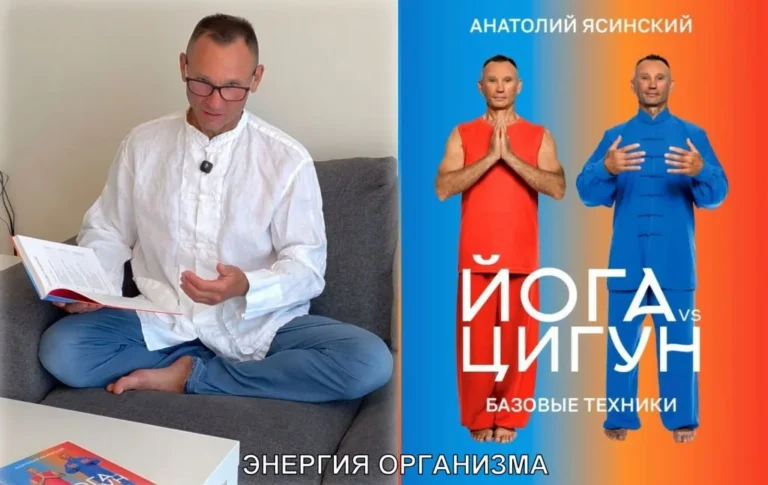
The foundations of yoga and qigong in six practices: 235 pages, over 200 photos and video lessons via QR codes. In English, Bulgarian and Russian.