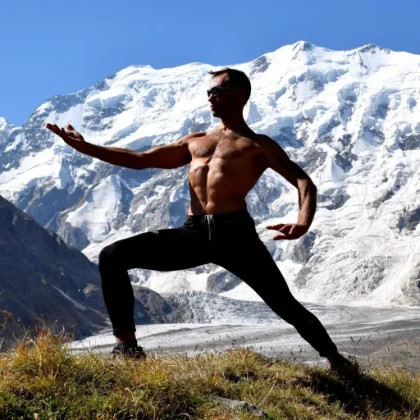
Ba Duan Jin (Eight Brocades): 8 Qigong Exercises Step by Step, with Video
Ba Duan Jin, the Eight Brocades or Eight Pieces of Brocade, is the best-known health qigong set in the world. People practise it in Beijing parks in the morning, in rehabilitation centres and in exercise classes across Europe. It has eight exercises and takes about fifteen minutes of calm work. There are no jumps, no deep squats and no heavy load on the joints, so it suits beginners, and it is still a good morning routine for experienced practitioners: spine, shoulders, lower back and breathing.
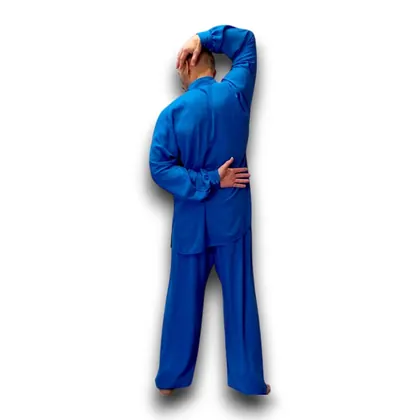
This page gives the whole set step by step in the version taught at Beijing Sport University, where I trained as a qigong instructor, together with a video filmed from behind so that you can follow without mirroring.
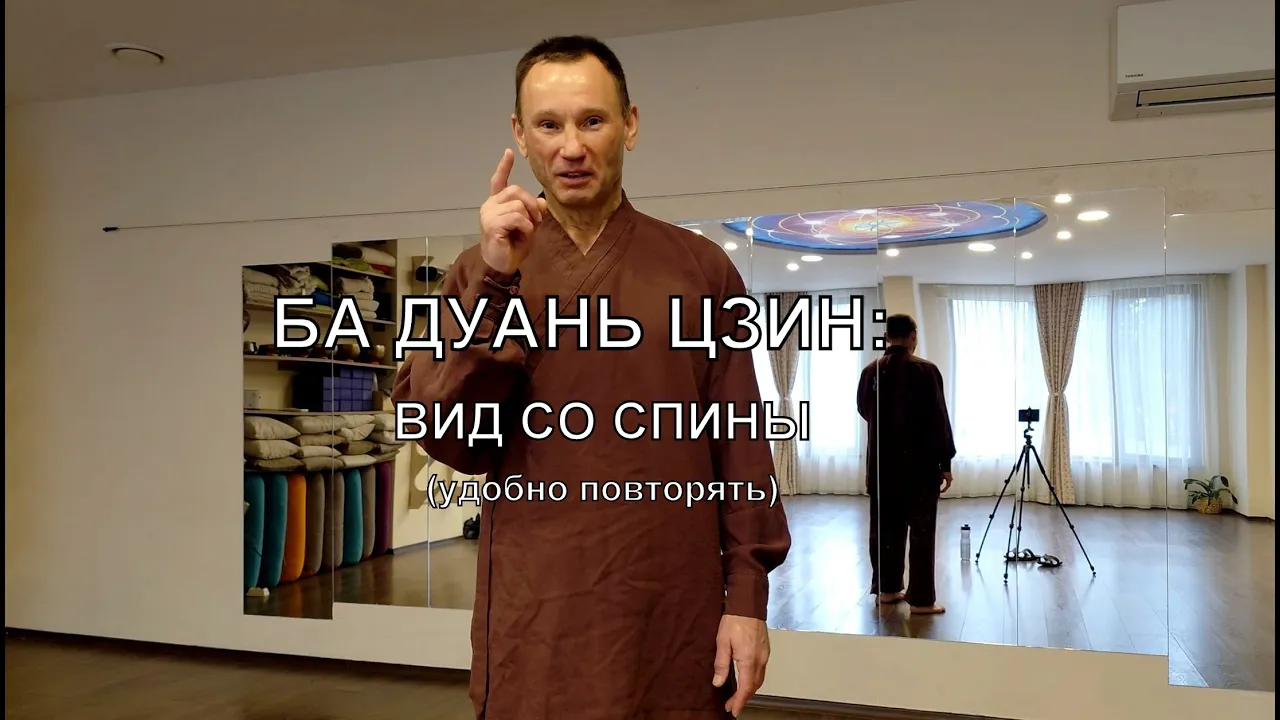
Audio & subtitles: EN · BG · RU (⚙ in the player)
In most videos the teacher faces the camera, and you have to flip every movement in your head: they raise their right arm, so you raise your left. In class I see students lose the side and the rhythm all the time, especially in the second exercise, the archer, and the fourth, looking back. Here the camera stands behind me. You stand behind the screen and simply repeat: left stays left, right stays right. Your attention is free for what matters, which is a long spine, steady breathing and shoulders that stay down. More about this format: Qigong from Behind.
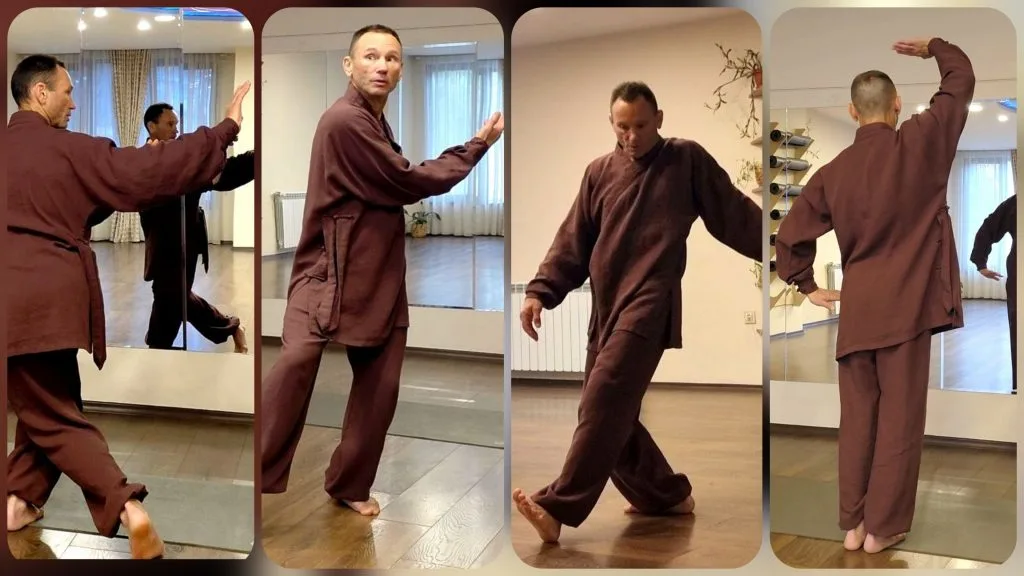
In my experience of teaching, students learn the eight exercises in two to three weeks of regular morning practice this way. With an ordinary mirrored video it usually takes one and a half to two months.
What Ba Duan Jin is and where it comes from
The name 八段錦 means “eight pieces of brocade”. Brocade is a precious silk fabric woven with gold and silver thread, a metaphor for something valuable. Each exercise was called a separate “piece”, and the student gradually puts all eight together into one cloth.
The first written mentions of the set date from the Song dynasty, around the twelfth century. Oral tradition attributes it to General Yue Fei, who is said to have devised the exercises to keep his soldiers fit on long campaigns. That cannot be verified. What is known is that by the fifteenth and sixteenth centuries Ba Duan Jin was widely practised both as military conditioning and as health exercise for civilians.
Over nine centuries dozens of variants have appeared: standing and seated, northern and southern, harder and softer. The version on this page is the standardised one adopted in China in 2003 as part of the Health Qigong programme. A working group of doctors and coaches selected the safest and most effective variants of each movement and fixed a single order. Today this version is taught in Chinese schools, universities and rehabilitation programmes.
In the language of modern exercise science, Ba Duan Jin is slow joint mobility work of low to moderate intensity, with an emphasis on the spine and shoulder girdle. It is one of the few qigong sets in which a beginner can do everything on the first day.
The eight exercises, step by step
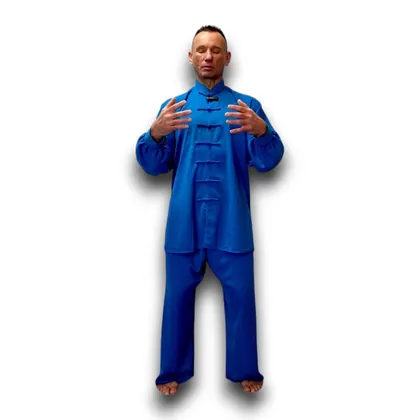
Stand with your feet about shoulder width apart, knees soft, crown reaching up. Breathe through the nose. As a rule, inhale as the arms rise or the body opens and exhale as they sink or the body closes. Start with a small range of movement and increase it gradually.
1. Two hands hold up the heavens
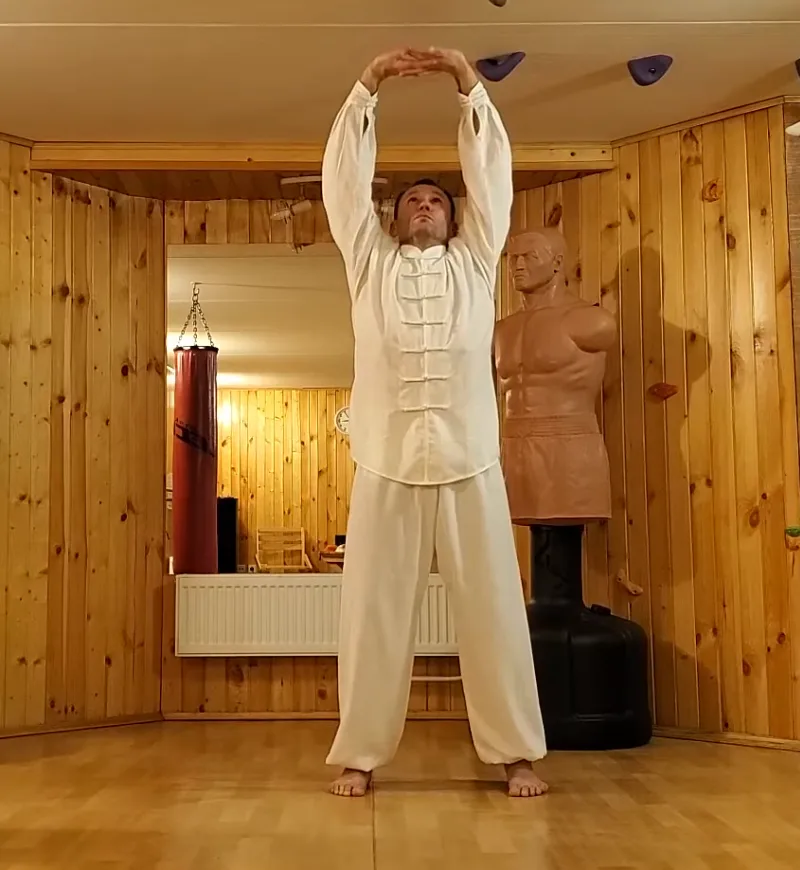
Standing upright, interlace the fingers, raise the arms overhead with the palms turned up and stretch upwards, then lower them. The upper back opens, the muscles between the ribs lengthen and the diaphragm lifts. It is the simplest exercise in the set and the deepest: it sets the posture for the other seven.
2. Drawing the bow
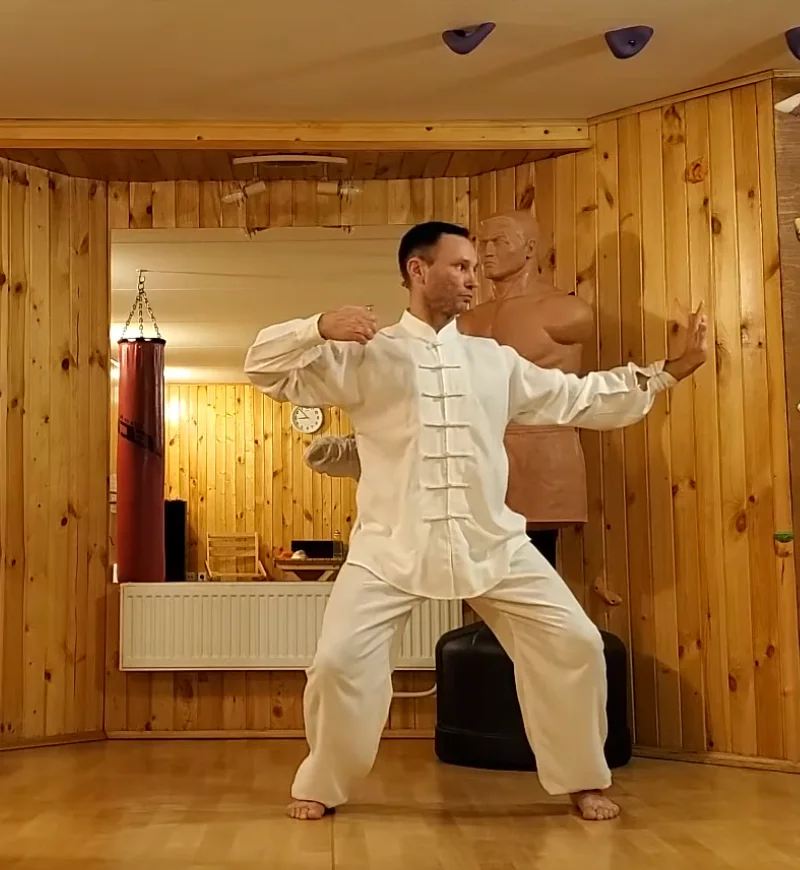
Step into a wide stance with the torso upright. One arm “draws the bowstring” towards the shoulder, the other extends to the side as if aiming. Then change sides. The shoulder joints, chest muscles and the stabilisers of the shoulder blades do the work. The exercise also trains firm support through the feet, which is needed in every Eastern practice and is usually missing in people who sit all day.
3. One hand up, one hand down
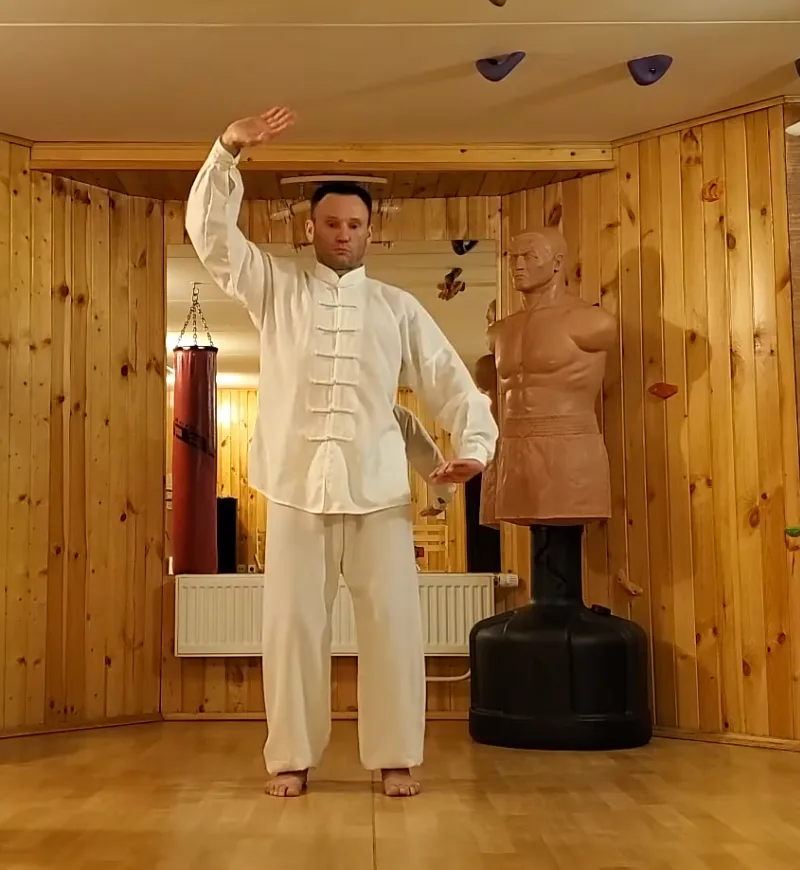
A vertical stretch along the diagonal: one palm presses towards the ceiling, the other towards the floor. Then change. The torso opens diagonally and the oblique abdominal muscles switch on. The change in pressure inside the abdomen gives the organs a gentle massage.
4. Looking back
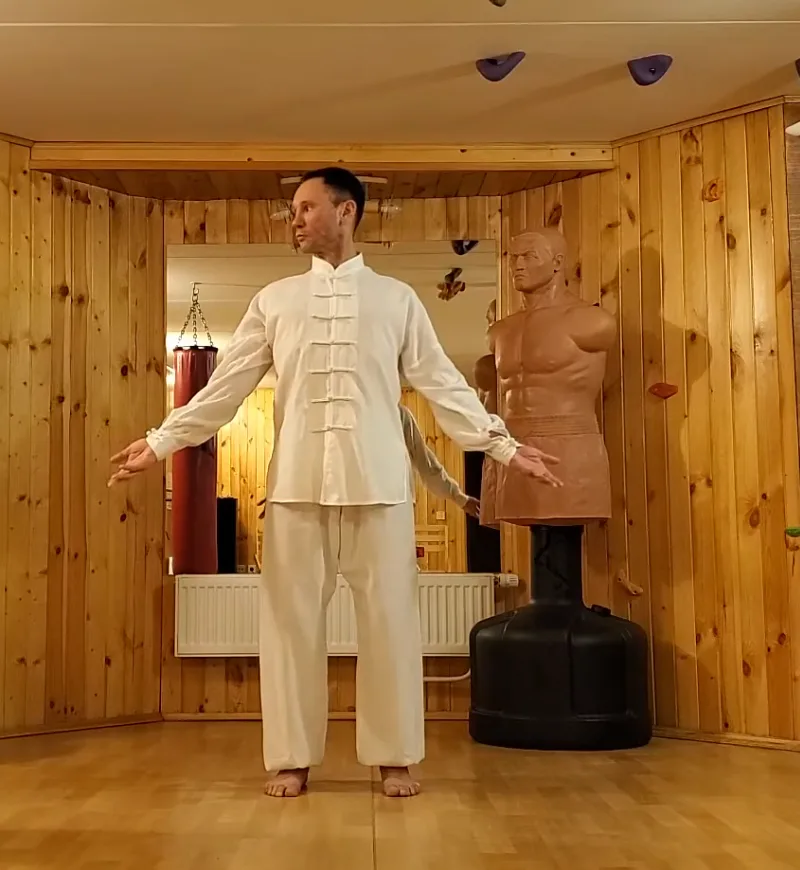
Turn the head slowly to one side and look behind you while the arms open and the chest widens, then return and repeat to the other side. The target is the neck, which stiffens before anything else in modern life, thanks to phones and monitors. With practice the range of rotation comes back.
5. Bend and turn
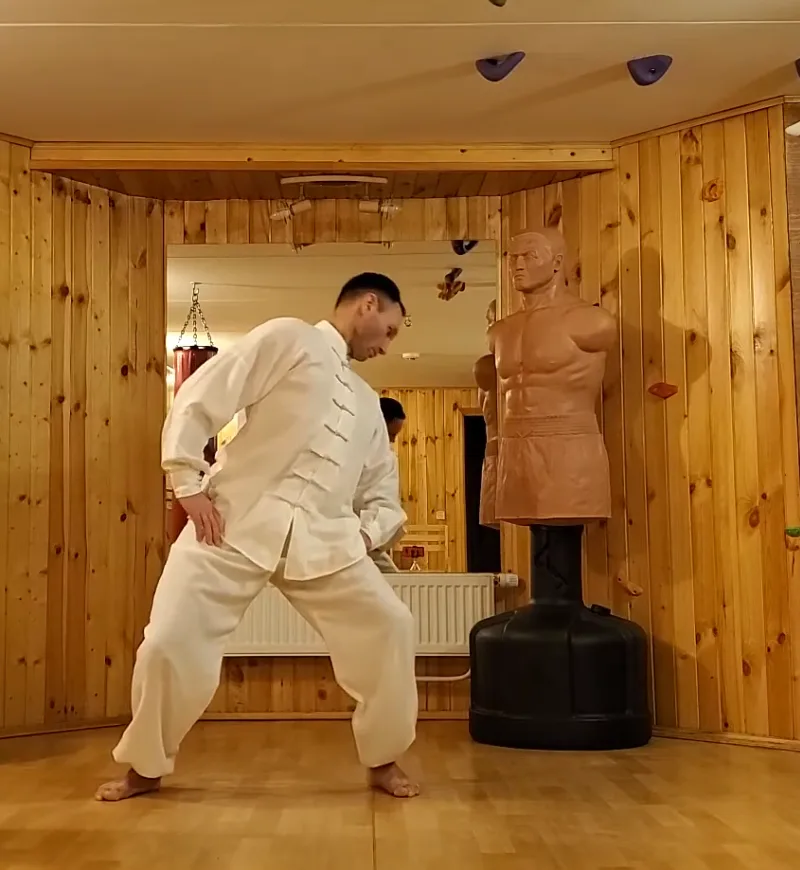
From a wide stance, lean the torso to one side and turn, looking back, then pass through the centre to the other side. This is the largest movement in the set. The hip joints, lower back, obliques and the muscles between the ribs all take part, and you train balance while the torso is moving.
6. Hands slide down the back
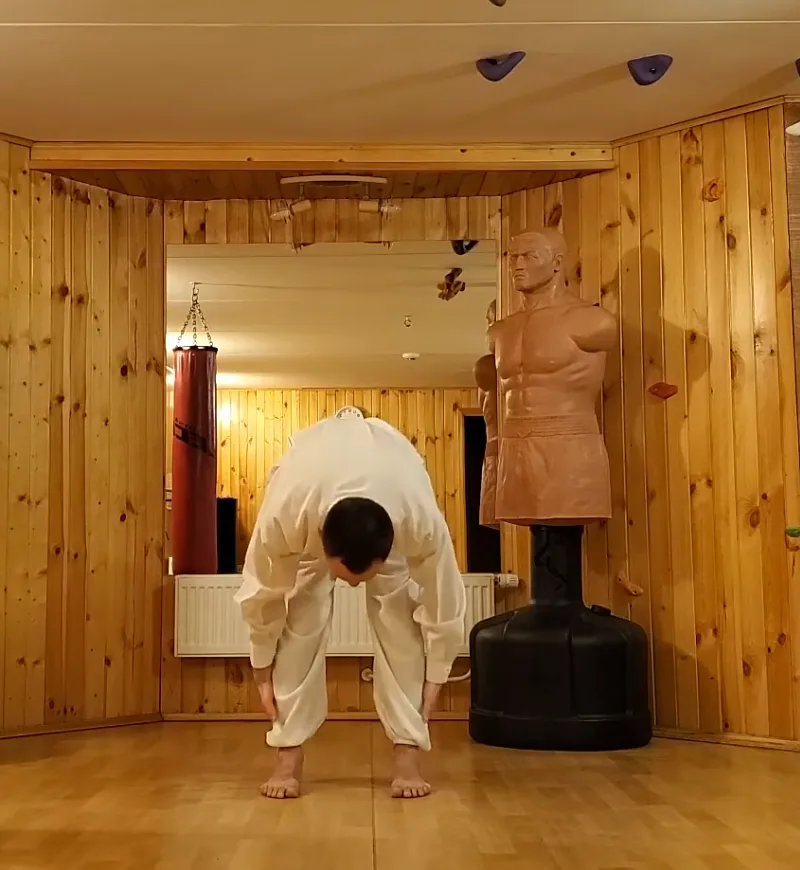
Fold forward while the palms slide down the back of the legs to the feet, then come back up. The whole back line of the body stretches, from the Achilles tendons to the back of the head, and the lower back regains flexibility. It also teaches a correct forward bend: from the hip joints, not by rounding the lower back.
7. Finger strike with a fierce gaze
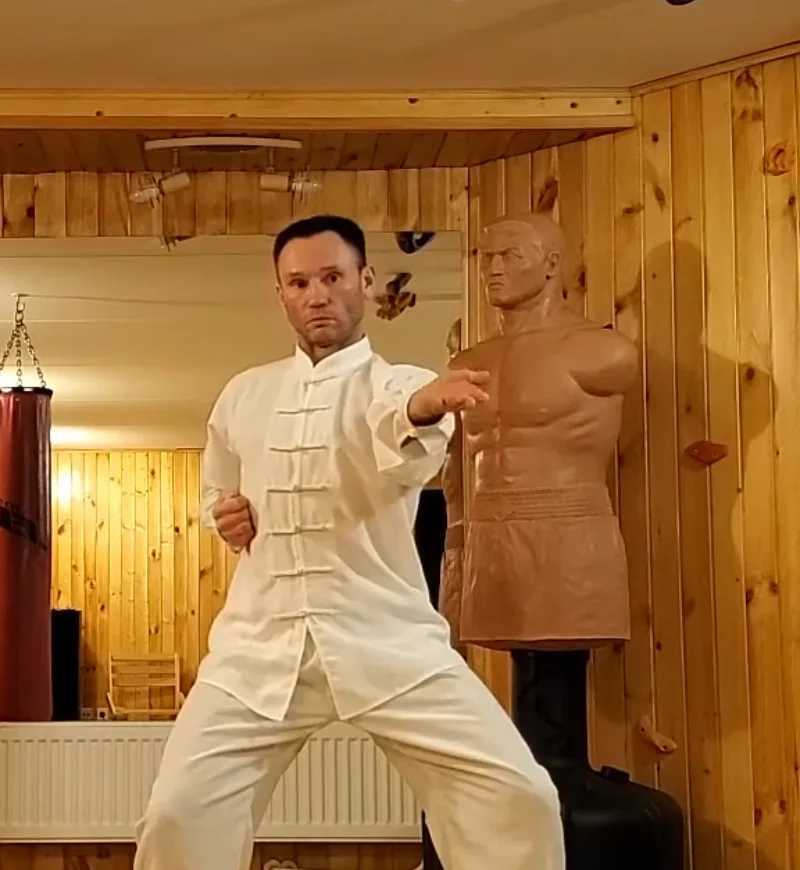
In a low horse stance, strike forward with alternate hands, palm open and fingers straight, keeping the centre stable and looking “through the opponent”. The legs, the core and the shoulder girdle work, and you train coordination between gaze, breath and arms. It is the only “strength” exercise in the set, and even this one does not overload you.
8. Heels to the floor, seven times
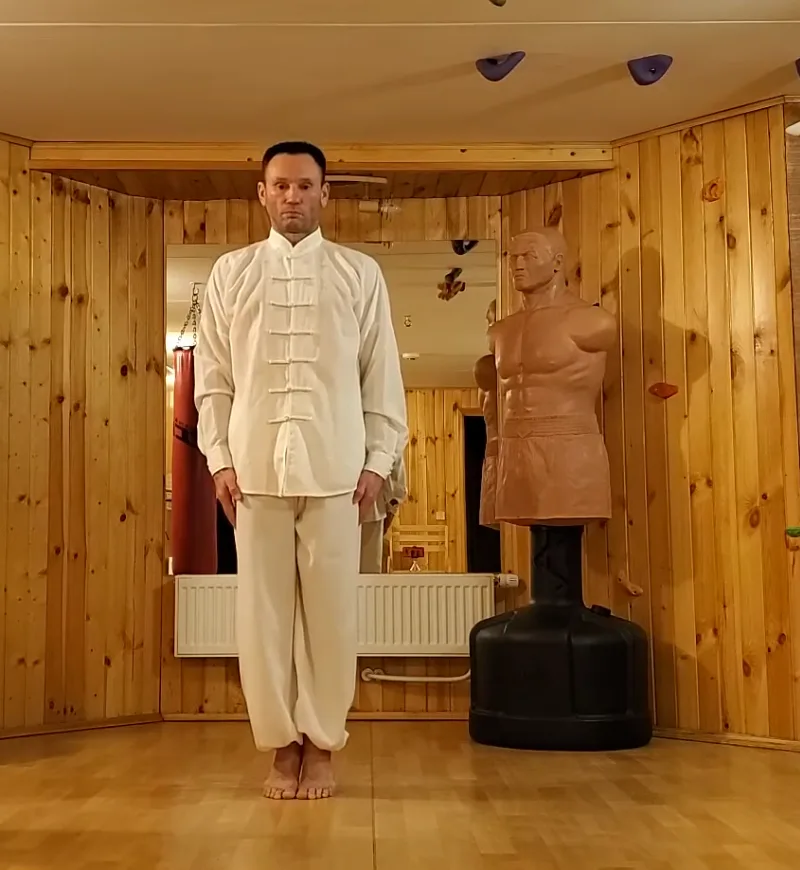
Rise onto the toes and let the heels drop softly, with a light shake through the body. Repeat seven times. This closing exercise involves everything at once: posture, the small stabilising muscles of the feet and a mild vibration through the spine. Afterwards tiredness usually goes and a sense of lightness comes.
How long and how often
The whole set takes twelve to fifteen minutes. Morning is the traditional time, but any regular slot works. While you are learning, practise daily and keep the range small. If fifteen minutes is too much at first, do the first four exercises one day and the last four the next. A short stand in Zhan Zhuang for three to five minutes before the set aligns the body, and the movements become more focused.
What happens in the body, without the mysticism
Traditional texts link each exercise to an organ and to the flow of qi. I prefer the language of physiology: it describes the same sensations in a way you can check.
The spine moves in every direction during the set: it lengthens, bends sideways, rotates and folds forward. Few everyday activities do that, and none do it slowly and under control.
The shoulder girdle goes through its full range with the shoulder blades stabilised. That is the opposite of how it sits at a desk.
Slow nasal breathing in time with the movement shifts the autonomic nervous system towards its recovery branch. This is where the calm and the warm hands after the set come from.
A word about the limits. Ba Duan Jin has been studied more than most qigong sets, and there are clinical trials and reviews on balance, blood pressure, sleep and mood. Many of the studies are small and short, so I do not promise that the set cures anything. I describe what I see in my own practice and in my students: a freer back and neck, steadier legs and a quieter head in the morning.
Common mistakes
Shoulders creeping up to the ears It happens in almost every exercise where the arms rise. Lengthen the neck and let the shoulders drop before you lift the arms.
Rounding the lower back in the forward bend In the sixth exercise, fold from the hip joints and bend the knees slightly if the hamstrings are tight.
Confusing the sides Common in the archer and in looking back when you learn from a mirrored video. The view from behind solves it.
Going for range too early The set works at a small range. Depth comes by itself after a few weeks.
Holding the breath When you concentrate on the shape, the breath stops. Let the movement be as slow as your breathing, not the other way round.
When to be careful
Ba Duan Jin has few contraindications. Be careful after a recent spinal injury and with severe high blood pressure: skip the deep forward bend and do not hold the arms overhead for long. With knee pain, keep the stances higher. With dizziness or balance problems, do the eighth exercise next to a wall or a chair. In all other cases, start with a small range and increase it gradually. If in doubt, talk to your doctor.
Questions and answers
The full set takes twelve to fifteen minutes at a calm pace.
Yes. It has no complicated asymmetric movements, deep squats or inverted positions, and a beginner can do all eight exercises on the first day with a small range of movement.
Daily practice in the morning works best while you are learning. A short session every day does more than a long one once a week.
Yes. They are different spellings and translations of the same Chinese name, 八段錦. You will also see “Eight Pieces of Brocade” and “Eight Section Brocade”.
The set is about nine hundred years old and has many regional and school variants. This page uses the standardised Health Qigong version adopted in China in 2003.
Yes. The set works well as a warm-up before yoga postures or as a separate morning routine. See the comparison of the two systems on the Qigong vs Yoga page.
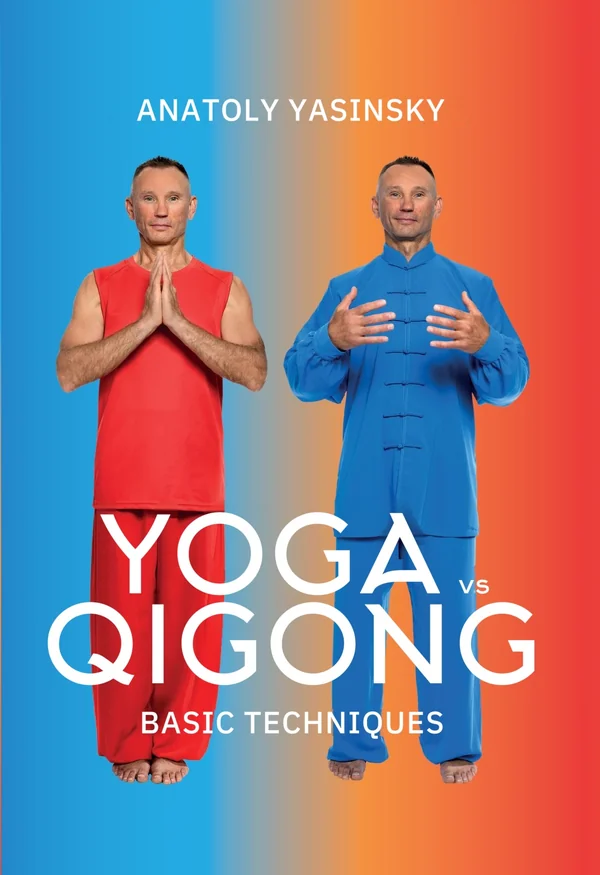
The foundations in the book
Ba Duan Jin rests on a few basic skills: an upright spine, relaxed standing, quiet breathing and steady attention. Those skills are the subject of my book “Yoga vs Qigong: Basic Techniques”, with more than 200 photographs and video lessons. The book is available in English, Bulgarian and Russian, as a PDF e-book and as an audiobook.
More practices
Also on the site